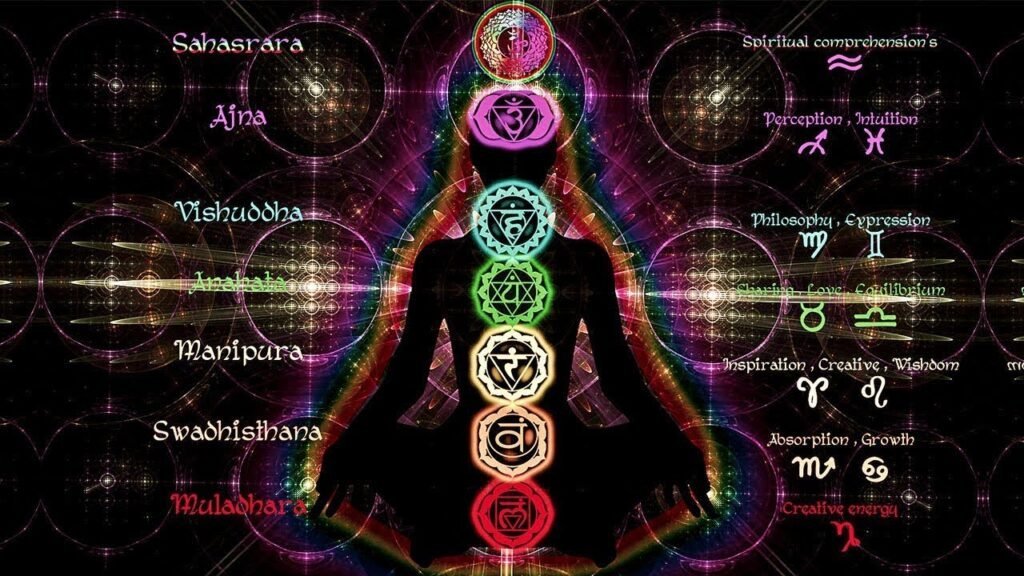
In esoteric Tantric and Yogic literature, Kundalini is depicted as a primordial spiritual potential symbolized by a serpent coiled three and a half times at the base of the spine (the Muladhara Chakra). When awakened, this evolutionary force ascends through the central energetic channel (Sushumna Nadi), piercing energetic knots (Granthis) and activating higher cognitive, intuitive, and spiritual capacities.
Somatic Vibrations
Understand sudden heat sensations, spontaneous tremors (kriyas), and electric currents along the spinal column.
Spiritual Emergence vs Crisis
Learn to differentiate healthy transpersonal emergence from nervous system overload, severe anxiety, or psychosis.
Sushumna Alignment
Discover the necessity of balanced Ida and Pingala nadis to avoid premature or destabilizing energetic surges.
The Subtle Anatomy: Nadis, Chakras & Granthis
To comprehend a Kundalini awakening without mystification, one must understand the three primary energetic conduits (Nadis) running along the spinal column:
- Ida Nadi: Originates at the left side of Muladhara; carries lunar, cool, introspective, parasympathetic energy (associated with the right brain hemisphere).
- Pingala Nadi: Originates at the right side of Muladhara; carries solar, warm, active, sympathetic metabolic energy (associated with the left brain hemisphere).
- Sushumna Nadi: The central canal running within the spinal cord from the perineum to the crown (Sahasrara). Kundalini safely ascends only when Ida and Pingala are in complete equilibrium.
| Chakra Center | Pranic Function | Associated Granthi (Knot) | Balanced Awakening Signs |
|---|---|---|---|
| Muladhara & Svadhisthana | Grounding, survival, sexual vitality | Brahma Granthi: Knot of material attachment | Unshakable courage, emotional poise, physical vigor |
| Manipura & Anahata | Willpower, universal love, digestion | Vishnu Granthi: Knot of emotional attachment | Boundless empathy, radiant digestion, inner peace |
| Vishuddha & Ajna | Truth, voice, intuitive wisdom | Rudra Granthi: Knot of intellectual ego/identity | Profound intuition, lucid perception, non-dual clarity |
| Sahasrara (Crown) | Spiritual transcendence & oneness | Transcends all knots (Moksha) | Samadhi, unity with universal consciousness |
Recognizing Common Awakening Symptoms
Kundalini does not awaken like a gentle afternoon walk; it is a profound neurological and biological recalibration:
- Spontaneous Physical Kriyas: Involuntary micro-tremors, spontaneous deep yogic breathing, or gentle spinal rocking as the nervous system clears cellular tension.
- Intense Thermal Sensations: Sudden waves of intense heat (solar prana) rushing up the spine, followed by cooling, tranquil sensations at the crown.
- Hypersensitivity to Sensory Inputs: Heightened sensitivity to bright lights, loud noises, crowds, synthetic fragrances, and processed foods.
- Psychological Ego Dissolution: Old identities, career ambitions, and superficial friendships fall away, often initiating a temporary "Dark Night of the Soul" before rebirth.
Crucial Warning: Kundalini Syndrome & Destabilization
Attempting to force Kundalini awake through aggressive breathwork (hyperventilating Bhastrika), drug-induced states, or intense energy transmissions without adequate grounding can shock the nervous system. This condition—known clinically as Kundalini Syndrome or spiritual crisis—can cause chronic insomnia, extreme tachycardia, ungrounded paranoia, and physical burnout.
The 4-Step Grounding Protocol
If energetic symptoms feel overly intense, follow this time-tested somatic stabilization routine:
- Warm, Dense Nutrition: Immediately stop prolonged fasting. Consume warm, grounding meals rich in root vegetables (sweet potatoes, carrots), healthy fats (ghee, olive oil), and grains.
- Direct Earthing (Barefoot on Soil): Spend at least 30 minutes walking barefoot on natural grass, sand, or rich earth to discharge excess bio-electrical charge.
- Discontinue Forcing Practices: Suspend hyper-stimulating pranayamas, headstands, and third-eye meditations. Replace with gentle restorative postures and walks in nature.
- Cooling Breath (Sheetali / Sitkari): Inhale slowly through a curled tongue or gently clenched teeth, exhaling through the nose to temper internal nervous system heat.
Learn Safe, Grounded Energy Science at Great Bali Yoga
Discover classical Tantra, Chakra psychology, and traditional Pranayama guided safely by master teachers in Bali. Explore our 200-Hour Yoga Teacher Training or revitalizing Bali Retreats.
Inquire About Bali Programs