
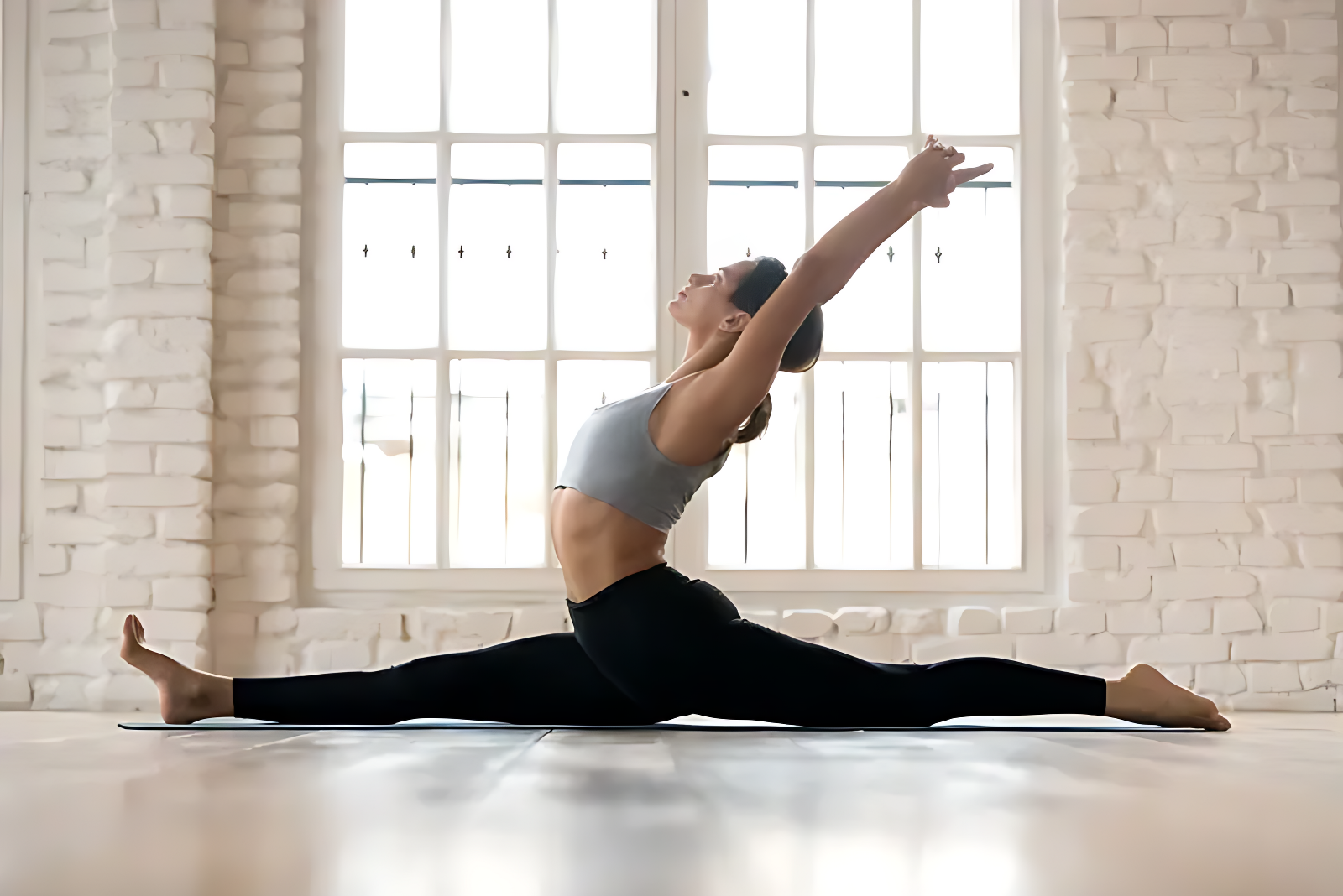
Monkey Pose or Hanumanasana benefits are one of the most practiced poses in yoga. This pose is known as a beautiful hip opener. This is often performed by advanced level yoga practitioners and enthusiasts. This pose helps in increasing the blood circulation in the body and also blesses one with various physical, mental and emotional benefits.
This is not considered a pose that is ideal for beginners, but with daily practice under the guidance of an expert teacher, one can perform this pose very easily. If we talk about the level of yoga of Hanumanasana Benefits, then it is an intermediate to advanced level of yoga asana. In this blog, we will understand everything about Hanuman Asana or Monkey Pose. Let’s understand its overview and etymology.
Overview and Etymology
If we talk about the name of this pose, Hanumanasana benefits, it comes from the Sanskrit word. Now, Hanuman is known as the monkey God in Hindu religion, whereas asana means pose or posture in the Hindu history and the holy book Ramayana,
Hanuman is known as the son of the Vayu God and the God is Anjana. He is a passionate devotee of Lord Rama. Lord Hanuman is known for his mystic virtues like changing his body in different shapes and he is known for his power and strength. He is as strong as a mountain and has all the fearless traits of a monkey.
Lord Hanuman symbolizes the traits of a human like mobility, flexibility, strength, and stability. This seated split pose reflects all these traits of Lord Hanuman. However, monkey pose is not written in any ancient Hatha yoga text, but it is an introduction, but it was introduced in 1970 by Swami Yogeshwarananda.
This relation makes this pose very sacred!
Let’s understand how to perform Hanumanasana benefits!
How to do Hanumanasana?
To perform the monkey pose or Hanumanasana, follow the following steps:
1. First you have to roll out your mat and begin in Samasthiti. Now inhale and lift your arms just like in a mountain pose.
2. Now you have to bend forward and perform Uttanasana as you exhale gently.
3. Now, you have to lift yourself a little up, maybe halfway, and look straight.
4. Next, you have to inhale and exhale as you extend your lower limbs into a plank pose.
5. After that you have to inhale as you curl your toes. Afterwards, bring your hip in a downward facing dog position.
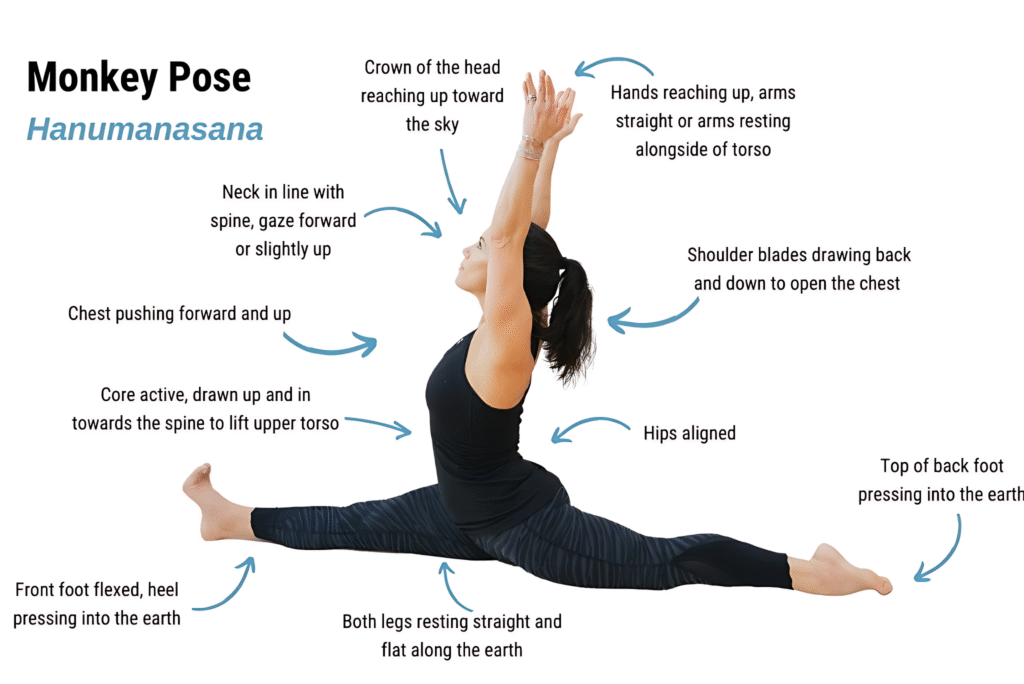
6. Next, you have to bring your right foot straight and place it forward. Make sure that your left knee is on the ground and you are in a crescent moon pose.
7. Afterwards, you have to keep your back very straight and hip should be square. Make sure that your spinal cord is upright.
8. Now you have to breathe gently and make your right foot straight. Your glutes should be on the mat.
9. Now extend both the legs either side.
10. Next, you have to breathe very deeply and straighten your spinal cord. Step nine, now you have to extend your arms overhead.
11. Next, join your hands. Step nine, now you have to hold Hanumanasana Benefits for at least 10 deep breaths or you can also do it for five if you are a beginner and then you have to repeat on either side.
12. Now you have to relax by coming in a child pose or Balasana.
Read More: Janu Sirsasana (Head-to-Knee Pose) and 7 Brilliant Benefits
How to relax after Hanuman Asana?
Now there are some poses that you can perform after Hanumanasana Benefitsto relax.
1- Eka Pada Rajakapotasana
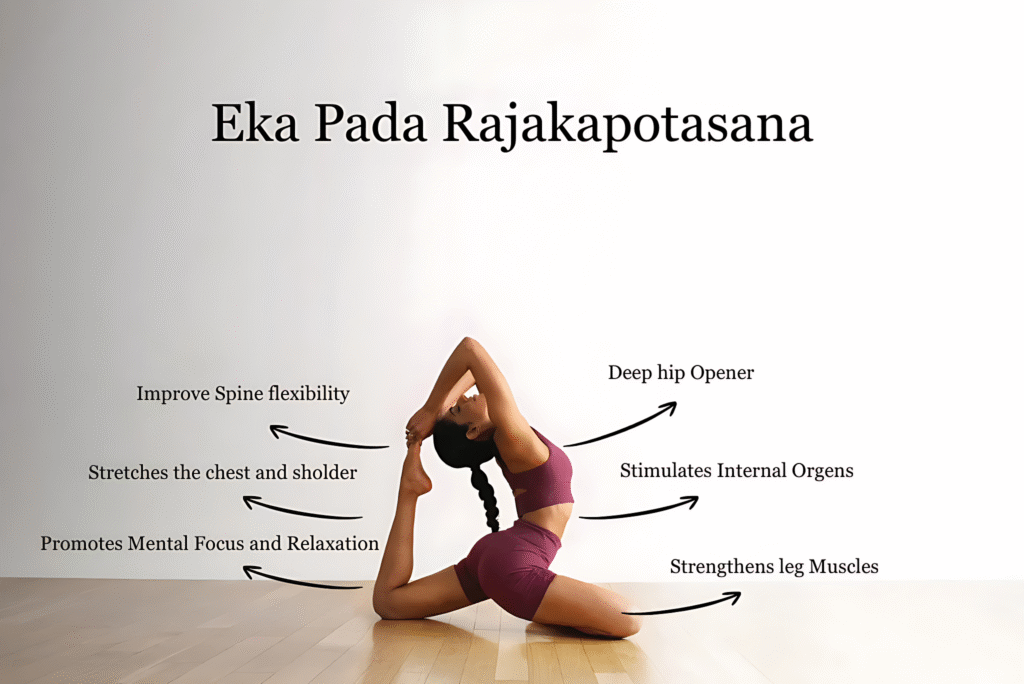
This is also known as sleeping pigeon pose. You can perform this pose to relax after performing Monkey pose.
2- Ananda Balasana
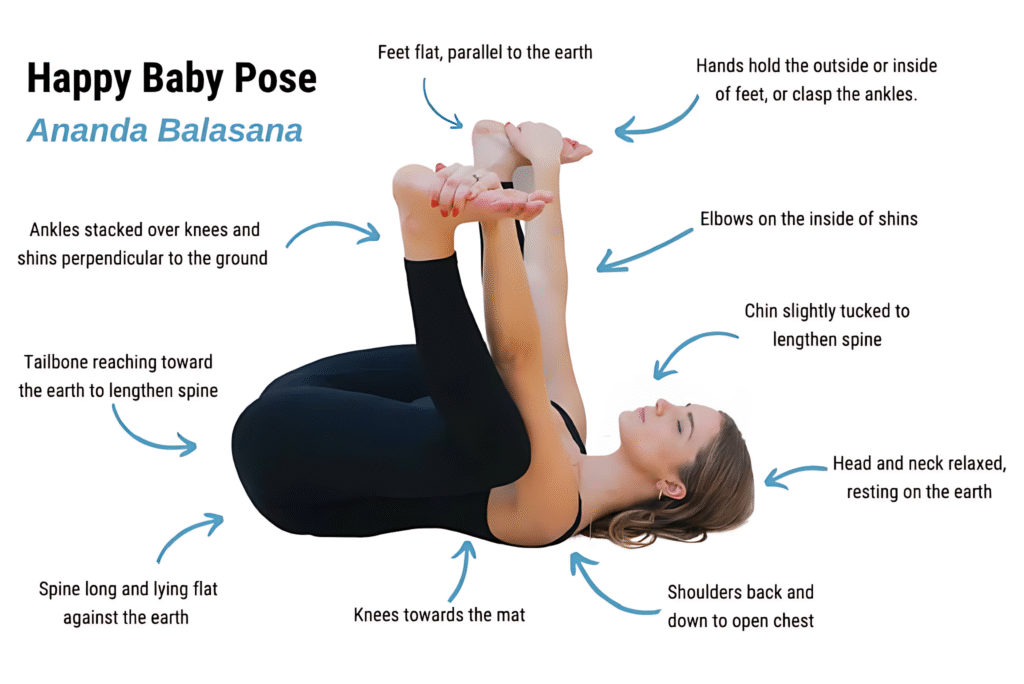
This is a very beautiful pose that helps in stretching your pelvic area and helps you in rejuvenating.
Benefits of Hanumanasana
If we talk about the Hanumanasana Benefits, these are the following:
1. When you perform Hanumanasana benefits, the whole posture is improved.
2. This is a beautiful pose that helps in increasing flexibility in the whole body.
3. When you perform Hanumanasana benefits, you will feel that your legs are getting toned.
4. Your legs’ muscles also get strong after performing Hanumanasana benefits.
5. Hanuman asana helps in improving the working of the whole nervous system in the body.
6. Hanuman asana helps in soothing the spinal cord and different types of pain like back pain and neck pain.
7. It helps in opening up the groin and the pelvic region.
8. This is a beautiful pose that helps in lengthening and strengthening the whole human body.
9. This helps in stimulating the reproductive organs. It helps in enhancing blood circulation.
10. This helps in opening up and activating the chakras, especially sacral and root chakra.
Read More: Akarna Dhanurasana: Steps, Benefits, Procedure
Hanumanasana variations to consider
Now, you can also perform some variation in the monkey pose as per your level of ability.
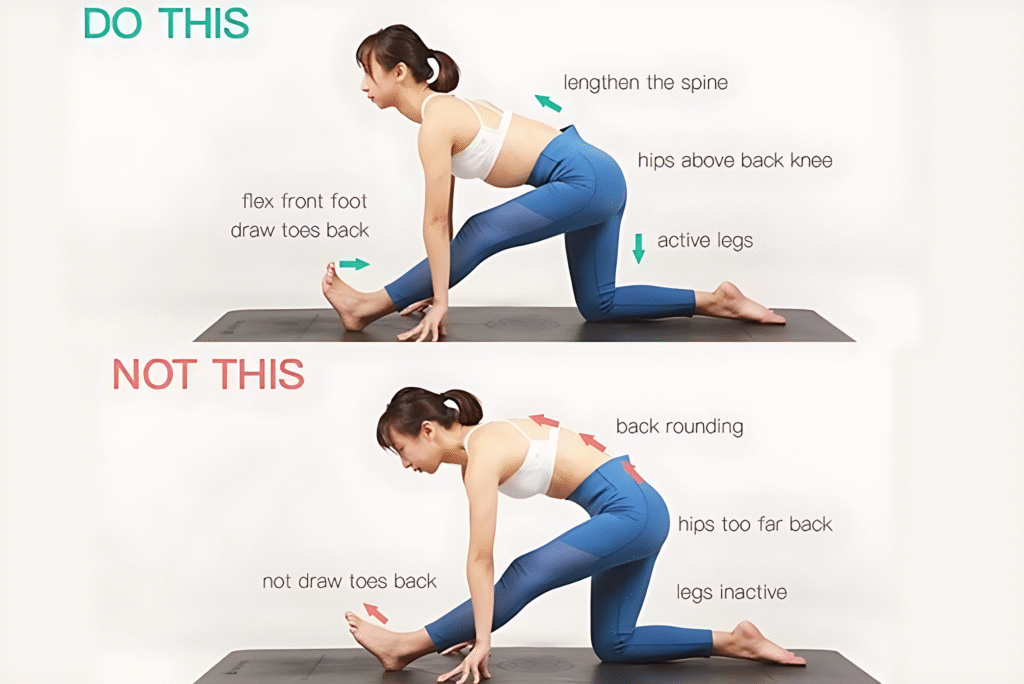
1. Half-monkey pose
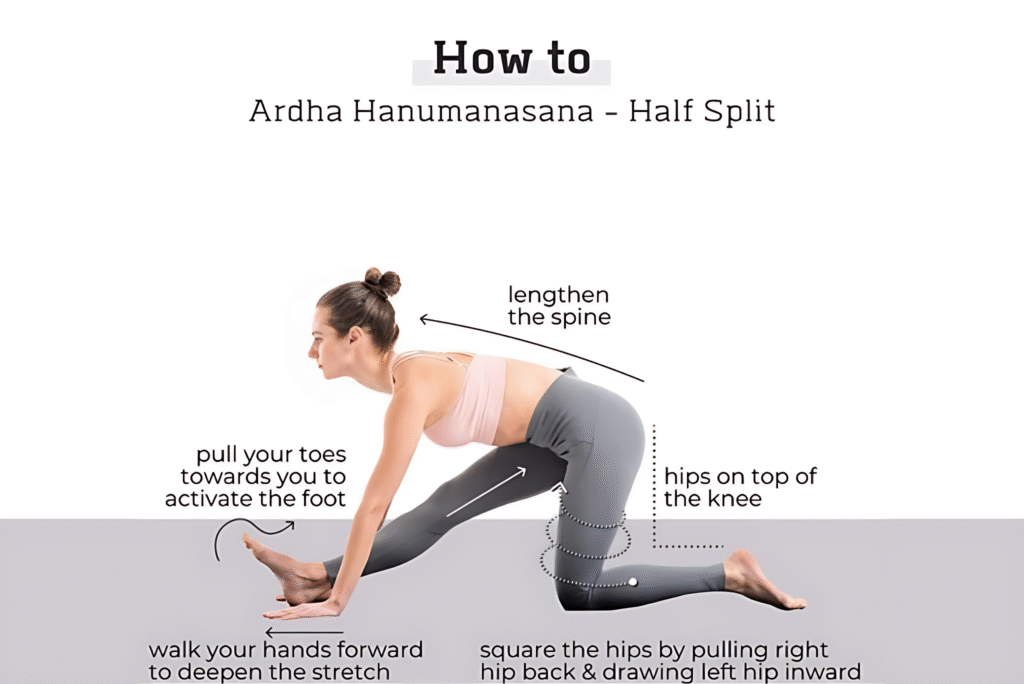
This is also known as Ardha Hanumanasana benefits. To perform this, you can start with a downward facing down pose and bring your one foot, probably left one in between your palms. Now bend your leg on the floor behind yourself. Now feel the stretch in your pelvic area. You should perform this on either side!
2. Half-monkey pose (Forward Bend)
This is another variation for this pose. You can land to this pose by performing ardha Hanumanasana benefits. You should inhale and extend your arms. Now exhale. As you exhale, stretch your torso area. Stretch it over your leg (left one…)! This will relieve your glutes. You can perform it for at least 30 seconds and can also continue it to 90 seconds.
3. Full monkey pose
Here you have to perform this stretch. For this you should land on the monkey pose by doing that same split. Hands over your head. Now bring your hand forward. Now bend forward and make your head touch the knee in front of you! If you are an advanced level yogi, then you will love Hanumanasana Benefits! Perform this pose for sixty to ninety seconds as per your capacity!! Yes but both sides!
Read More: Bhujangasana contraindications (Cobra Pose)
Breathing tips and advice during Monkey Pose Yoga
When you are in a mountain pose, then make sure that you have to inhale. When you are in a downward facing pose while performing monkey pose or Hanuman asana, then also try to inhale.
Afterwards, when your arms are overhead, when your arms are placed above your head in the monkey pose, then also make sure that you are consciously inhaling.
Always remember to exhale when you are performing uttanasana while doing the monkey pose.
Similarly, when you are in balasana at the end of the pose, then also make sure that you are exhaling.
Now, when you are changing or making the transitions during the monkey pose flow or stretching it for a long time, then always try to inhale and exhale very gently.
Make sure that you are performing only for 15 to 30 seconds if you are a beginner.
Now, if you are an advanced practitioner, then you can hold the pose for 60 to 90 seconds.
Conclusion
This is a wonderful advanced level yoga posture that helps in opening up the lower body and gives enough strength and flexibility to the body. Hanumanasana benefits also helps one mentally! This is an amazing pose that relieves stress and anxiety and prepares the body for a holistic day ahead. It’s great bodywork helps in enjoying good quality sleep at the end of the day. This is a great pose to lead an advanced-level yogic routine!