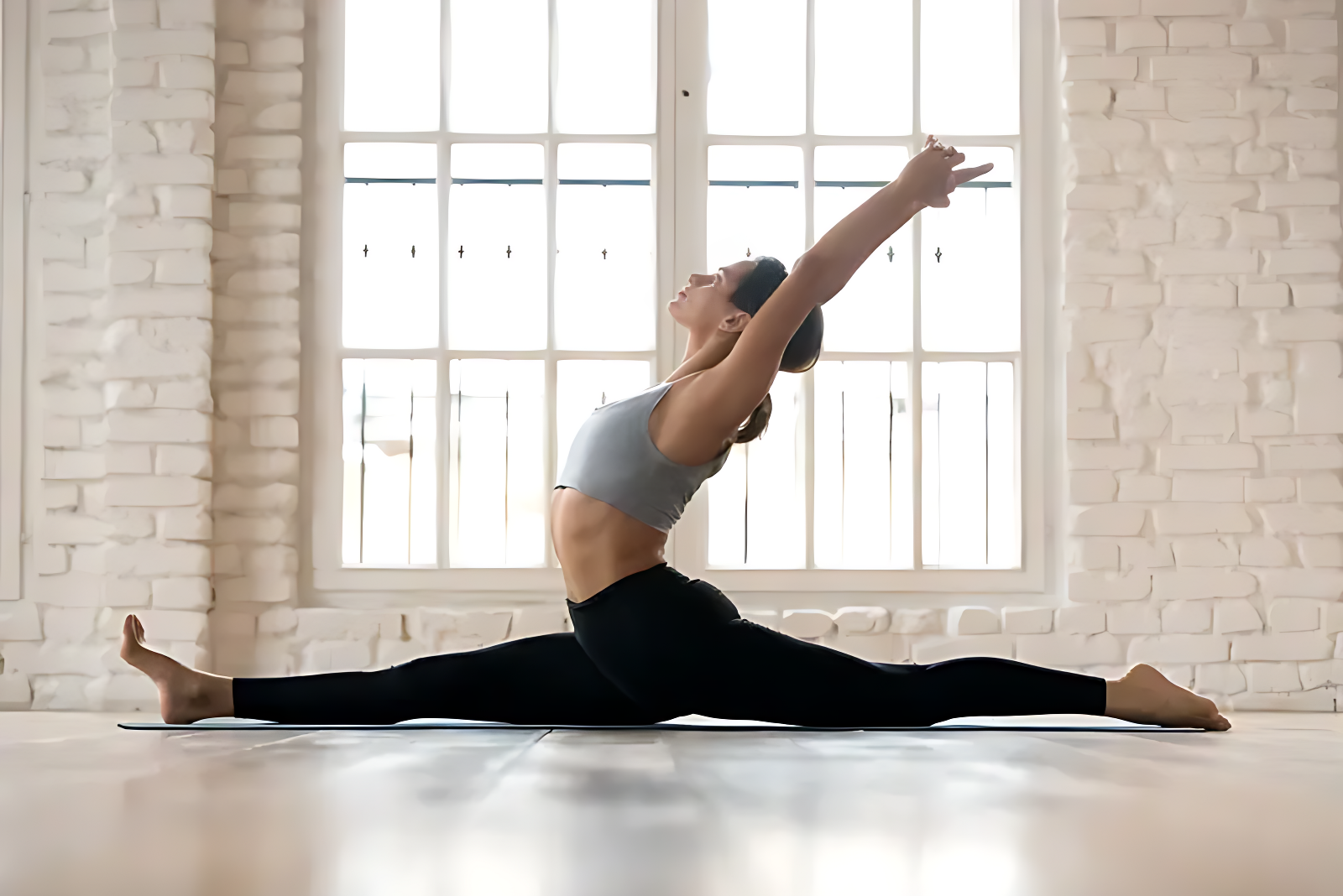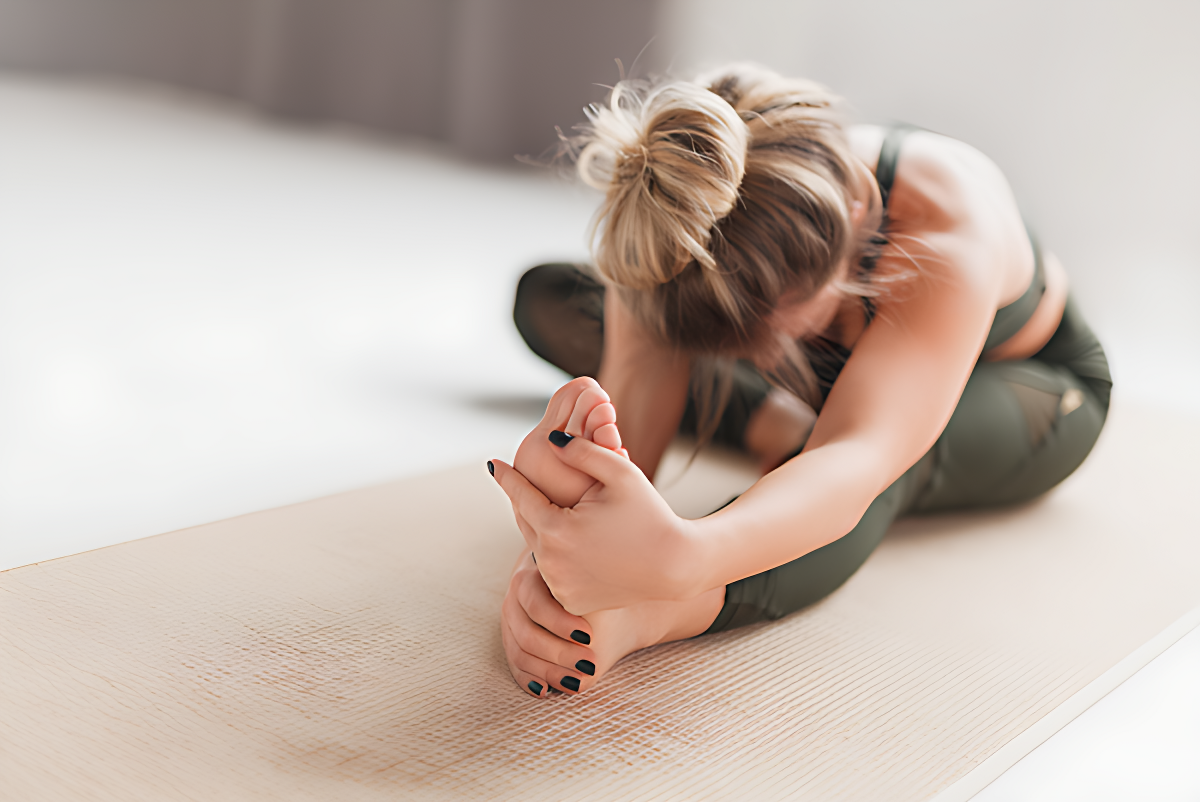
In the classical Hatha Yoga texts, Janu Sirsasana (literally: Janu = knee, Sirsa = head, Asana = posture) is revered as a therapeutic powerhouse. Often mistaken for a simple hamstring stretch, this asymmetrical seated forward bend acts as an internal abdominal massage, stimulating digestive organs while soothing hyperactivity in the central nervous system.
Lower Back Relief
Decompress tightness in the quadratus lumborum (QL) and open tight lower back muscles without spinal flexion strain.
Liver & Kidney Detox
The asymmetrical compression stimulates the liver on the right fold and the spleen/pancreas on the left fold.
No Touching Required
Understand why 'head to knee' is a direction of energy, not a requirement to round your neck aggressively.
7 Key Health Benefits of Janu Sirsasana
- Asymmetrical Hamstring Release: Because one knee is bent outward, the pelvis can anchor more securely, releasing the single extended hamstring without pulling on both SI joints simultaneously.
- Quadratus Lumborum (QL) Stretch: Gently rotates the spine, opening lateral back muscles that often lock up from driving or sitting in chairs.
- Stimulates Liver and Kidneys: The gentle compression directly tones the abdominal viscera, enhancing sluggish digestion.
- Calms the Heart and Regulates Blood Pressure: Down-regulates sympathetic nervous firing, easing anxiety and nervous tension.
- Groin and Hip Capsule Mobility: The bent leg rests in external rotation and abduction, gently opening tight adductor longus muscles.
- Relieves Mild Sciatic Discomfort: Gently lengthens the piriformis and superficial back line without sharp compressive load.
- Prepares the Mind for Meditation: Forward folds turn the senses inward (Pratyahara), cultivating mental stillness.
Alignment Matrix: Correct Cues vs. Common Errors
| Anatomical Focus | Correct Biomechanical Cue | Common Fatal Error |
|---|---|---|
| Pelvic Hinge | Anterior pelvic tilt: fold directly from hip creases | Posterior tilt: tucking tailbone and hunching back |
| Spine Length | Sternum reaches toward front toes, long neck | Ducking head down to touch forehead to knee |
| Extended Foot | Dorsiflexed foot with toes active and vertical | Floppy foot falling inward (sickling the ankle) |
| Bent Knee Support | Rest knee on yoga block if floating in the air | Letting bent knee hang suspended with torque |
Study Classical Asana Alignment in Ubud, Bali
Discover the profound relationship between breath, alignment, and internal anatomy in our residential 200-Hour Yoga Teacher Training and tranquil Retreats in Bali.
Inquire Admissions