In modern western culture, yoga is frequently reduced to physical postures performed on a rubber mat. Yet in the classical tradition, physical postures (Asana) represent only one-eighth of a comprehensive philosophical system. Around 400 CE, the sage Maharishi Patanjali codified the royal path of classical yoga in the Yoga Sutras, presenting the Ashtanga Yoga framework (from the Sanskrit Ashta meaning eight, and Anga meaning limbs) as a holistic roadmap toward mental quietude and ultimate spiritual liberation (Kaivalya).
Living Ethics Daily
Learn how to translate ancient Yamas and Niyamas into conscious digital boundaries, ethical work, and authentic communication.
Sutra Mastery (2.29)
Understand the structural progression from external disciplines (Bahiranga) to internal meditative absorption (Antaranga).
Beyond the Physical Mat
Discover why mastering physical asana is merely the foundational preparation for sensory withdrawal and sustained concentration.
The Architectural Framework: Patanjali's 8 Limbs at a Glance
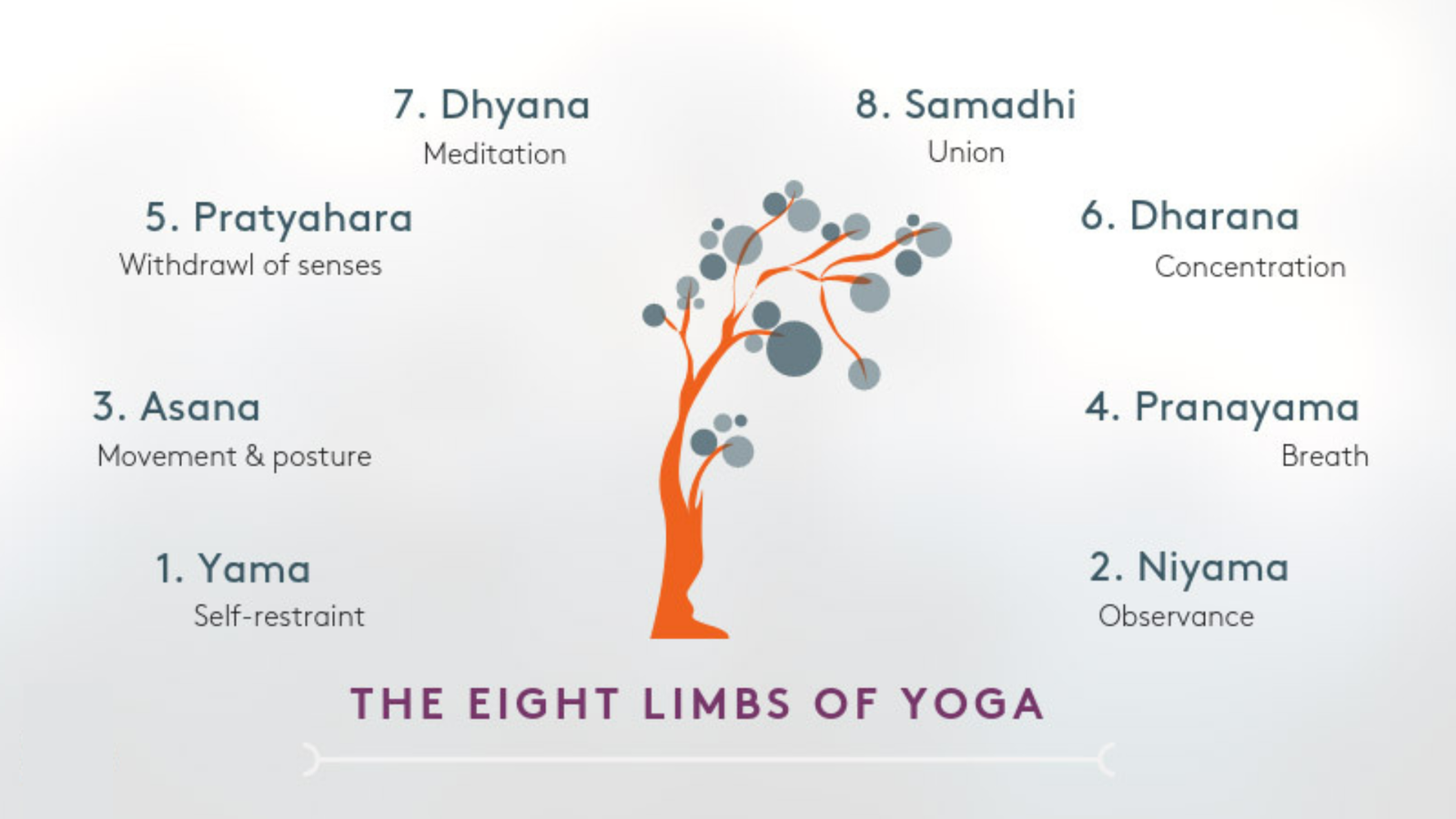
Patanjali intentionally used the metaphor of limbs rather than steps. A tree's branches develop harmoniously together; similarly, practicing ethical restraints supports deep meditation, while meditation softens ethical rigidity.
| Limb & Sanskrit Name | Dimension | Core Philosophical Focus | Practical Modern Application |
|---|---|---|---|
| 1. Yama | External Ethics | Social harmony & universal non-violence | Ahimsa (kindness), Satya (truthfulness in speech), Asteya (non-stealing) |
| 2. Niyama | Internal Discipline | Personal habits & self-care observances | Saucha (cleanliness), Santosha (contentment), Svadhyaya (self-study) |
| 3. Asana | Physical Body | Steady, comfortable posture (Sthira Sukham) | Strengthening the spine so the body can sit motionless without pain |
| 4. Pranayama | Bio-Energy | Breath expansion & vital force regulation | Nadi Shodhana, Ujjayi, and calming the autonomic nervous system |
| 5. Pratyahara | Sensory Bridge | Conscious withdrawal of sensory inputs | Digital detox, closing the eyes, disconnecting from external notifications |
| 6. Dharana | Internal Mind | Single-pointed concentration (Ekagrata) | Fixing attention on the breath, a candle flame (Trataka), or mantra |
| 7. Dhyana | Internal Mind | Unbroken contemplative meditation | Effortless flow where observer and object of focus merge seamlessly |
| 8. Samadhi | Spiritual Union | Absolute absorption & spiritual freedom | Transcendence of the ego-self; resting in pure, unbounded awareness |
1. The Five Yamas: Universal Restraints for Social Harmony
The Yamas form the ethical bedrock of yoga. Without ethical peace in your relationships, attempting meditation is like setting sail in a boat with an anchor stuck in the mud:
- Ahimsa (Non-violence): Cultivating compassion in thoughts, words, and deeds toward all beings, including self-compassion when you fail.
- Satya (Truthfulness): Speaking with authenticity, honesty, and kindness without deceit or manipulation.
- Asteya (Non-stealing): Respecting others' property, time, emotional boundaries, and creative ideas.
- Brahmacharya (Energy Conservation): Directing vital sexual and emotional energy toward spiritual development rather than compulsive dissipation.
- Aparigraha (Non-greed / Non-possessiveness): Releasing hoarding, consumerism, and attachment to material outcomes.
2. The Five Niyamas: Personal Observances for Self-Mastery
While Yamas govern your outer life, the Niyamas cultivate your inner sanctuary:
- Saucha (Purity): Cleanliness of the physical body, dietary habits, home environment, and mental intake.
- Santosha (Contentment): Unconditional gratitude for what is present in this moment, detached from external circumstances.
- Tapas (Disciplined Fire): Willingness to undergo healthy friction, self-discipline, and consistent daily practice to purify conditioned patterns.
- Svadhyaya (Self-Study): Reflective study of sacred wisdom texts and honest contemplation of your psychological motives.
- Ishvara Pranidhana (Surrender to Higher Intelligence): Letting go of egoic control and trusting the grand order of the cosmos.
The Outer Limbs (Bahiranga) vs. The Inner Limbs (Antaranga)
Patanjali divided the eight limbs into two clear operational phases:
Bahiranga Yoga (Limbs 1–5): Yamas, Niyamas, Asana, Pranayama, and Pratyahara work directly on the external behavior, biological nervous system, and sensory organs. They purify the physiological instrument.
Antaranga Yoga (Limbs 6–8): Dharana, Dhyana, and Samadhi together are known as Samyama (integrated psychological mastery). When you concentrate on an object without interruption (Dharana), that stream turns into continuous meditation (Dhyana), which naturally dissolves into transcendental absorption (Samadhi).
Study Classical Patanjali Philosophy in Ubud, Bali
Deepen your knowledge of the Yoga Sutras, Sanskrit foundations, and practical asana at Great Bali Yoga. Join our 200-Hour Yoga Teacher Training or transformative Ubud Meditation Retreats.
Explore Course Modules