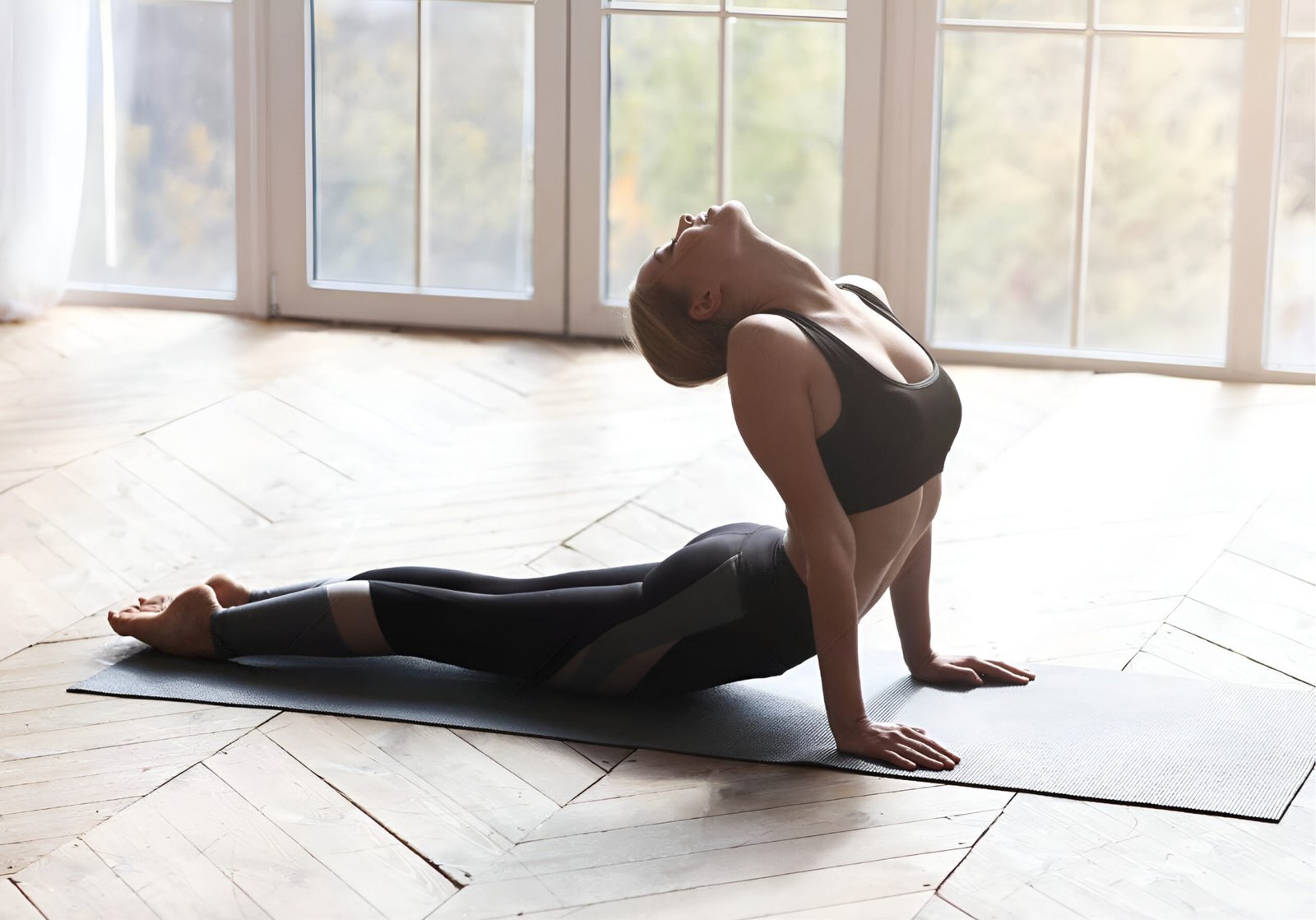
Bhujangasana (Cobra Pose) is one of the most practiced backbends in yoga, serving as a core component of classical Sun Salutations. However, because it involves prone lumbar hyperextension and anterior abdominal stretching, practicing it inappropriately can lead to nerve impingement, facet joint strain, or visceral irritation.
Disc & Facet Safety
Understand the difference between safe thoracic extension and harmful lumbar vertebrae compression.
Pregnancy Protocol
Learn why prone belly compression must be avoided and discover supported standing or kneeling alternatives.
Hands-On Screening
Learn how to spot cervical hyperextension and collapsed shoulders in mixed-level group classes.
The 7 Critical Contraindications of Bhujangasana
If you or your yoga students have any of the following conditions, Bhujangasana should either be modified or entirely omitted:
- Second and Third Trimester of Pregnancy: Lying prone compresses the gravid uterus and inferior vena cava, restricting maternal and fetal blood return. Replace with Camel Pose (Ustrasana) or Cow Pose.
- Severe Lumbar Disc Herniation (L4-S1): While mild extensions can sometimes centralize disc bulges, aggressive Cobra can pinch posterior nerve roots, triggering acute radiating sciatica down the leg.
- Spondylolisthesis & Spondylolysis: Vertebral slippage is directly aggravated by hyperextension, which exerts shear stress on the pars interarticularis.
- Carpal Tunnel Syndrome & Wrist Injuries: Bearing body weight on hyperextended wrists compresses the median nerve. Modify using Sphinx Pose on forearms or fist grips.
- Recent Abdominal Surgery or Hernia: Stretching the rectus abdominis places excessive tension on surgical incisions or abdominal wall tears.
- Cervical Spondylosis & Neck Instability: Throwing the head backward pinches cervical facet joints and compresses vertebral arteries, causing dizziness and nausea.
- Active Peptic Ulcers or Inflammatory Bowel Flare-Ups: Direct prone pressure increases intra-abdominal tension, aggravating digestive inflammation.
Contraindication & Modification Matrix
| Condition | Biomechanical Risk | Safe Modification |
|---|---|---|
| Pregnancy (2nd/3rd Trimester) | Direct uterine compression | Seated Cat-Cow or Supported Camel with bolsters |
| Carpal Tunnel Syndrome | Median nerve wrist impingement | Sphinx Pose (Salamba Bhujangasana) on forearms |
| Lumbar Facet Arthropathy | Posterior bone-on-bone friction | Baby Cobra (feet grounded, hands hovering off mat) |
| Cervical Spine Pain | C1-C7 suboccipital compression | Keep chin tucked, gaze angled 45 degrees toward floor |
How to Practice "Baby Cobra" Safely
For practitioners recovering from mild stiffness, Baby Cobra isolates the thoracic back erectors without dumping into the lumbar vertebrae:
- Lie prone with the tops of your feet pressing firmly into the mat, pinky toes touching the floor.
- Place your palms flat beside your floating ribs, keeping your elbows tucked tightly against your torso.
- Engage your core by drawing the navel gently toward the spine to support the lumbar curve.
- Inhale and peel only the chest and clavicles off the floor using your spinal back muscles, not pushing with your hands. Hover your palms 1 inch off the mat to confirm no wrist weight.
- Keep the back of your neck long; look slightly forward and down rather than staring at the ceiling.
Master Biomechanical Safety at Great Bali Yoga
Gain anatomical confidence to teach students of all physical limitations safely. Join our 200-Hour YTT in Ubud or restorative Bali Yoga Retreats.
Inquire About Training