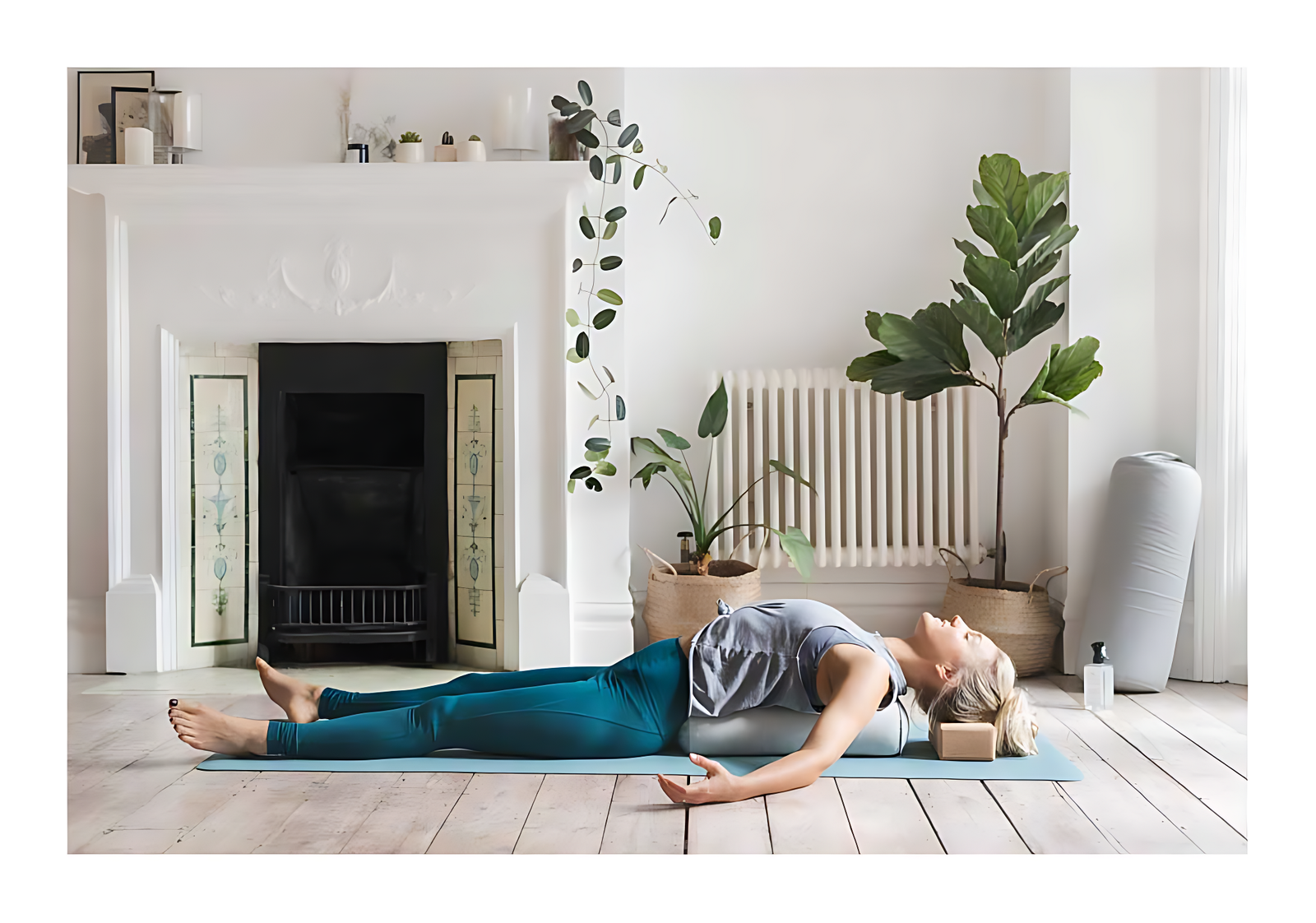
In Sanskrit, Shava translates to "corpse." Far from being a passive nap or casual post-workout cooldown, Shavasana (Corpse Pose) is an active state of conscious physiological surrender. During 10 intentional minutes in Shavasana, your brain waves slow from hyper-alert Beta frequencies down to restorative Alpha and Theta rhythms, allowing the parasympathetic nervous system to initiate cellular recovery and vagal tone regulation.
Vagus Nerve Reset
Downshift out of chronic fight-or-flight sympathetic overload to lower cortisol and steady heart rate variability.
Cadence & Voice Script
Master precise body scan verbal cues, vocal modulation, and silence pauses to guide students safely into deep relaxation.
Overcoming Fidgeting
Learn anatomical prop adjustments that eliminate lower back tightness and mental chatter when lying completely still.
The Neuroscience of Shavasana: What Happens to Your Body?
Modern neuroscience confirms that conscious stillness produces dramatic physiological shifts across your endocrine and nervous systems:
| State / Phase | Nervous System Branch | Brainwave Activity | Physiological Changes |
|---|---|---|---|
| Work / Stress Mode | Sympathetic (Fight-or-Flight) | High Beta (15–30 Hz) | Elevated cortisol, shallow breathing, constricted blood vessels |
| Minutes 0–4 (Body Scan) | Ventral Vagal Engagement | Alpha Waves (8–12 Hz) | Heart rate slows, facial muscles soften, peripheral blood vessels dilate |
| Minutes 5–8 (Deep Stillness) | Full Parasympathetic Dominance | Theta Waves (4–7 Hz) | Digestion restarts, cellular repair activates, cortisol drops |
| Minutes 9–10 (Re-Awakening) | Integrated Calm Awareness | Calm Beta / Alpha | Refreshed cognitive focus without grogginess or fatigue |
The 10-Minute Step-by-Step Guided Script
Use this script for your personal home practice or read it aloud when teaching students:
Minute 0:00 – 02:00: Setup & Prop Alignment
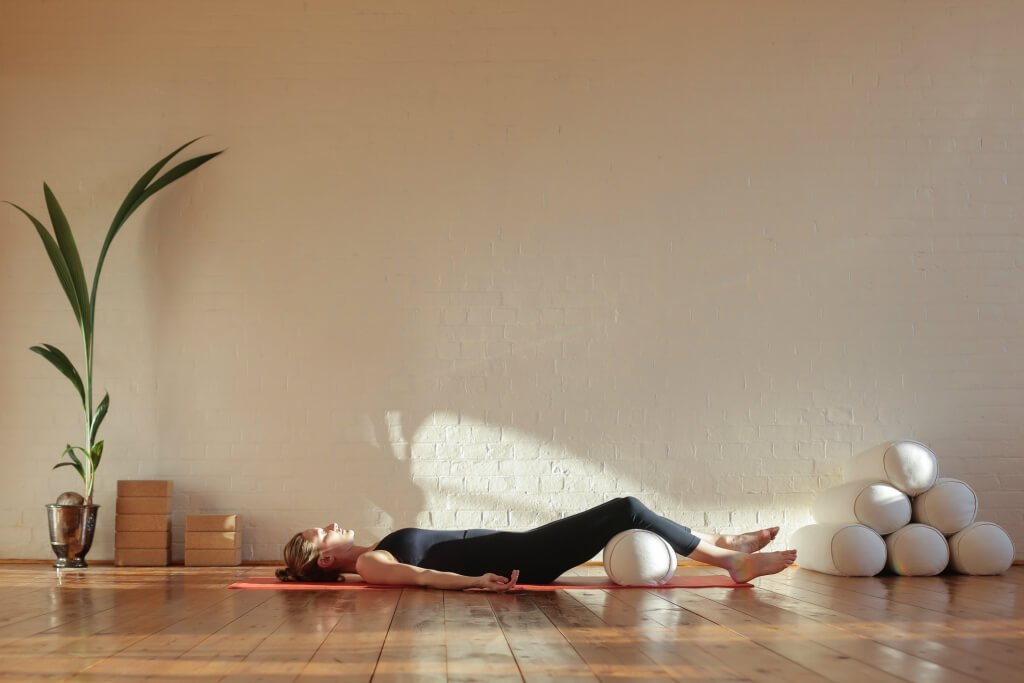
Lie flat on your back on your mat. Separate your feet wider than hip-width, letting your toes flop outward naturally. Position your arms 6 inches away from your torso, turning your palms open toward the sky. (Teacher Tip: If your lower back feels pinched, place a bolster or rolled blanket under your knees). Gently draw your shoulder blades down your back. Close your eyes, take a deep clearing breath in through your nose, and exhale with a soft sigh through your mouth.
Minute 02:00 – 05:00: Neuromuscular Body Scan
Bring awareness down to the soles of your feet. Release all holding in your toes, arches, and heels. Feel the calves, shins, and kneecaps grow heavy against the floor. Soften your quadriceps, hamstrings, and the deep muscles around your pelvis. Let your belly become soft like water; release any habitual gripping around the navel. Feel your chest broaden and your shoulder joints melt into the earth. Relax your throat, soften the jaw, un-clench the teeth, and let the tongue rest on the floor of your mouth. Smooth the brow and temples.
Minute 05:00 – 08:00: Subtle Breath & Weightless Stillness
Now, release all conscious control over your breath. Do not try to breathe deeply; simply witness the natural, effortless inflow and outflow. Notice the subtle pause at the bottom of each exhalation. If thoughts arise about your to-do list or past events, acknowledge them like clouds passing across an open blue sky, and gently return awareness to the sensation of your body being cradled by gravity.
Minute 08:00 – 10:00: Conscious Re-Integration
Gradually deepen your inhalation. Begin inviting micro-movements back into your physical body: wiggle your fingers, brush your thumbs across your fingertips, and gently roll your ankles. Turn your head side to side, releasing the cervical neck. On an inhale, reach both arms overhead for a long, full-body awakening stretch. Bend your knees, roll onto your right side in a supported fetal position, and pause for three grounding breaths. With eyes remaining closed, press your left hand down to gently rise up to a comfortable seated posture.
Master Restorative Healing & Yoga Nidra in Bali
Immerse yourself in authentic somatic restoration, breath regulation, and trauma-informed relaxation. Explore our 200-Hour Yoga Teacher Training or rejuvenating Bali Retreats.
Discover Bali Offerings